Address
Kerala, India.
Made with ❤️ to make learning and exam preparation a little easier.
Address
Kerala, India.
Made with ❤️ to make learning and exam preparation a little easier.

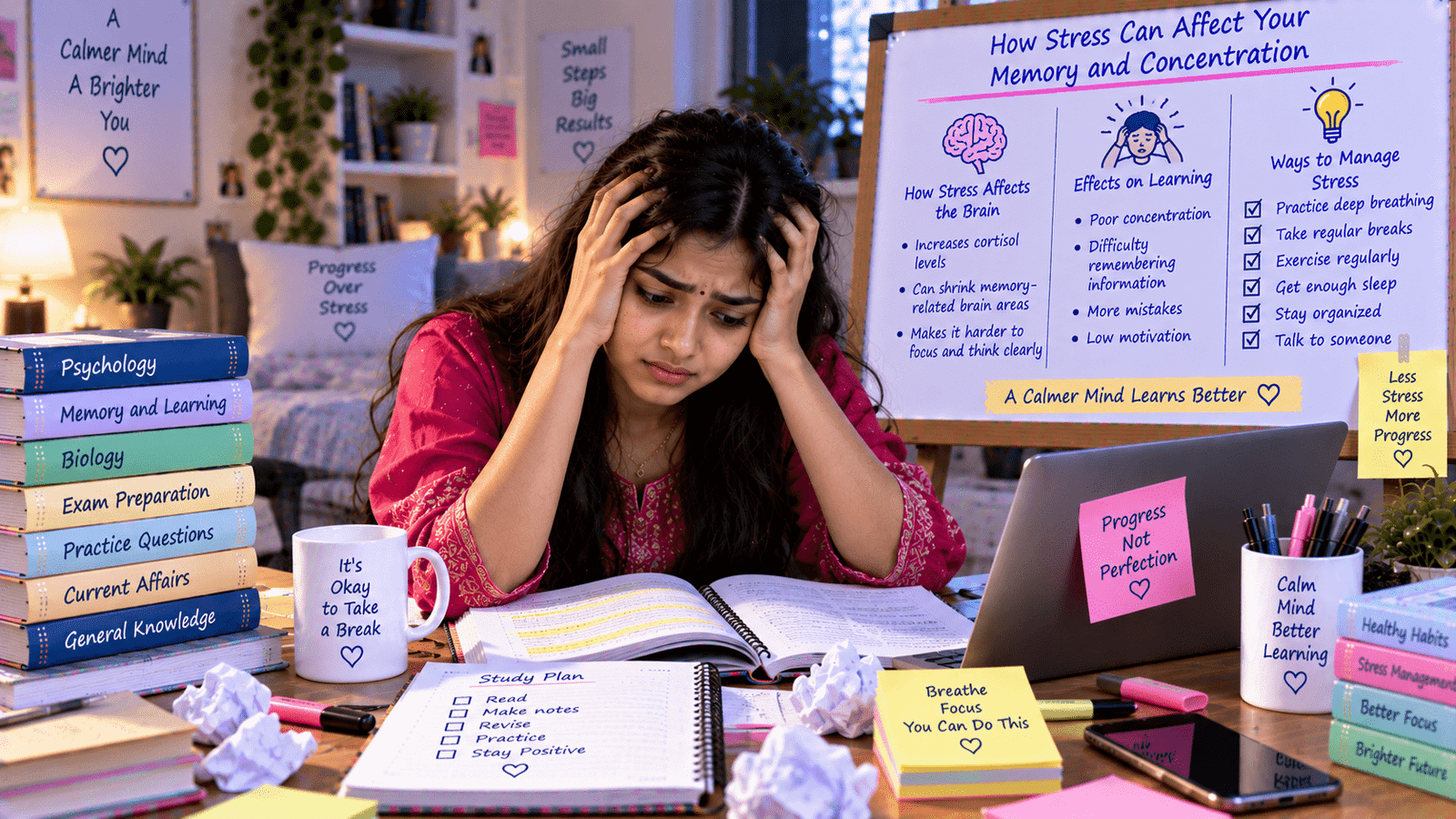
Students may experience stress because of exams, deadlines, difficult subjects, workload, or concerns about performance. A certain amount of pressure can motivate you to prepare, but prolonged or intense stress can make studying feel more difficult by interfering with attention and mental energy.
When you are worried about several things at once, it can be difficult to direct your attention toward one task. You may sit with a textbook but find yourself repeatedly thinking about the examination or another responsibility.
Strong emotional pressure can make it harder to focus on new information and retrieve what you have learned. This can create a frustrating cycle in which difficulty remembering something increases worry, which then makes concentration even harder.
One practical approach is to divide a large workload into smaller tasks. Instead of thinking about an entire syllabus at once, choose one topic or study goal for the current session.
A realistic study schedule can reduce uncertainty. Write down what you need to complete and assign manageable tasks to different study periods. Avoid creating a schedule so demanding that falling behind becomes inevitable.
Sleep, breaks, physical activity, and time away from studying are important parts of a balanced routine. They can help you maintain your energy and avoid turning every part of the day into study time.
If stress becomes overwhelming or begins to interfere significantly with everyday life, consider speaking with a trusted person, teacher, counselor, or appropriate professional. Asking for support is a practical step, not a failure.
Stress can influence how effectively you concentrate and learn. A realistic study plan, regular breaks, adequate rest, and appropriate support can help you manage academic pressure more effectively.