Address
Kerala, India.
Made with ❤️ to make learning and exam preparation a little easier.
Address
Kerala, India.
Made with ❤️ to make learning and exam preparation a little easier.

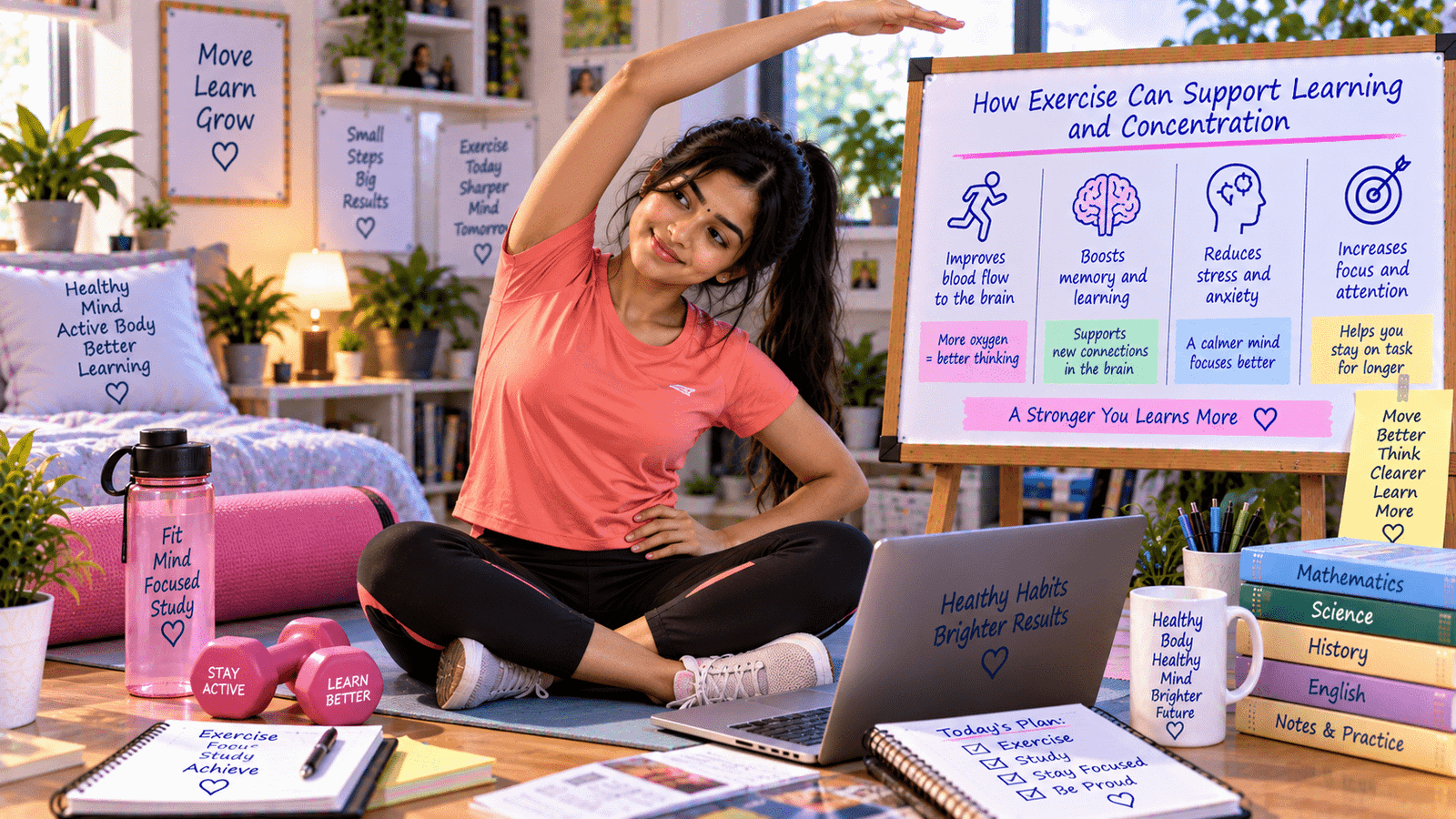
Studying for long periods can make students feel mentally tired and physically inactive. Regular physical activity can be a useful part of a balanced lifestyle and may support areas that are important for learning, including mood, attention, and overall well-being.
Physical activity increases blood flow throughout the body and is associated with various aspects of brain health. Regular movement can complement other healthy habits that support learning.
Sitting at a desk for several hours without moving can become uncomfortable. A short walk, stretching session, or other suitable physical activity can provide a change of pace between study sessions.
Some students find that physical activity helps them return to their studies feeling more refreshed. A short period of movement between study blocks may be useful when attention begins to decline.
You do not necessarily need a complicated exercise routine. Walking, cycling, sports, stretching, dancing, or other enjoyable forms of movement can help you stay active. The important thing is to choose activities that fit your lifestyle and abilities.
Exercise should support your overall routine rather than become another source of stress. Plan physical activity around your study schedule and other responsibilities.
Consistency is usually more practical than trying to make dramatic changes for a few days. Find a realistic amount of movement that you can maintain as part of your regular routine.
Learning does not happen only at a desk. Regular physical activity can be part of a healthy lifestyle that supports concentration, energy, and overall well-being. Combining study with appropriate movement and rest can create a more balanced routine.